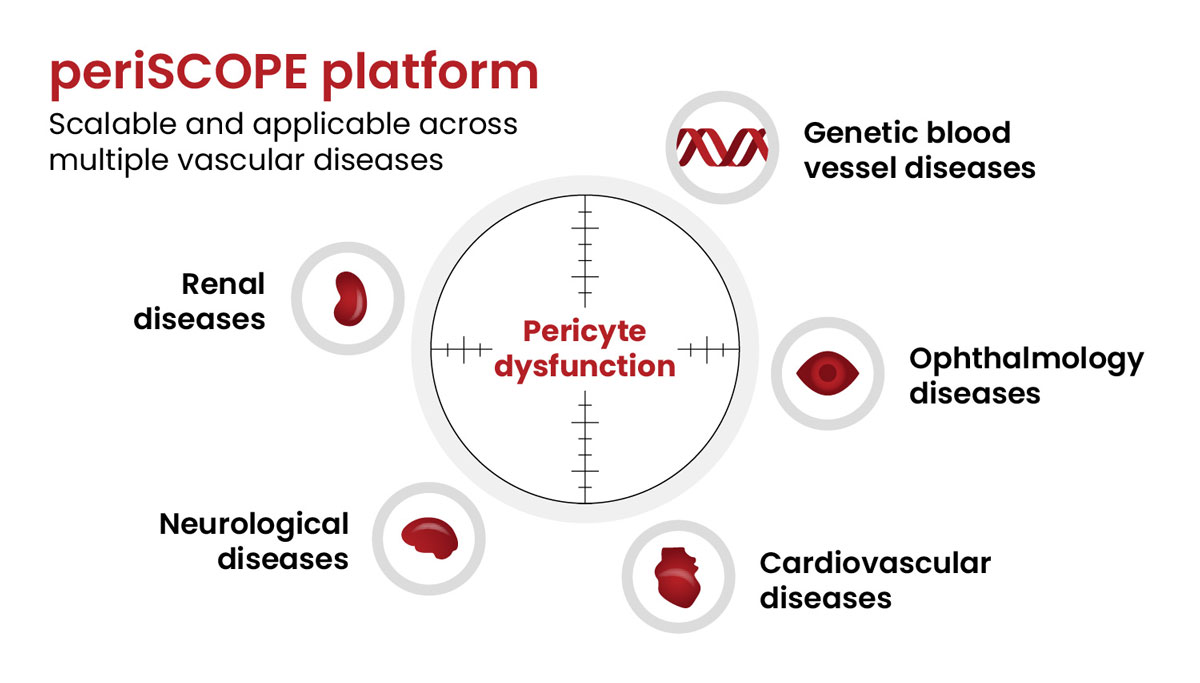
Vascular instability driven by pericyte dysfunction is increasingly recognised as a root cause of genetic blood vessel, cardiovascular, renal, ocular, and neurodegenerative diseases.
Pericyte biology – unlocking novel therapeutic targets

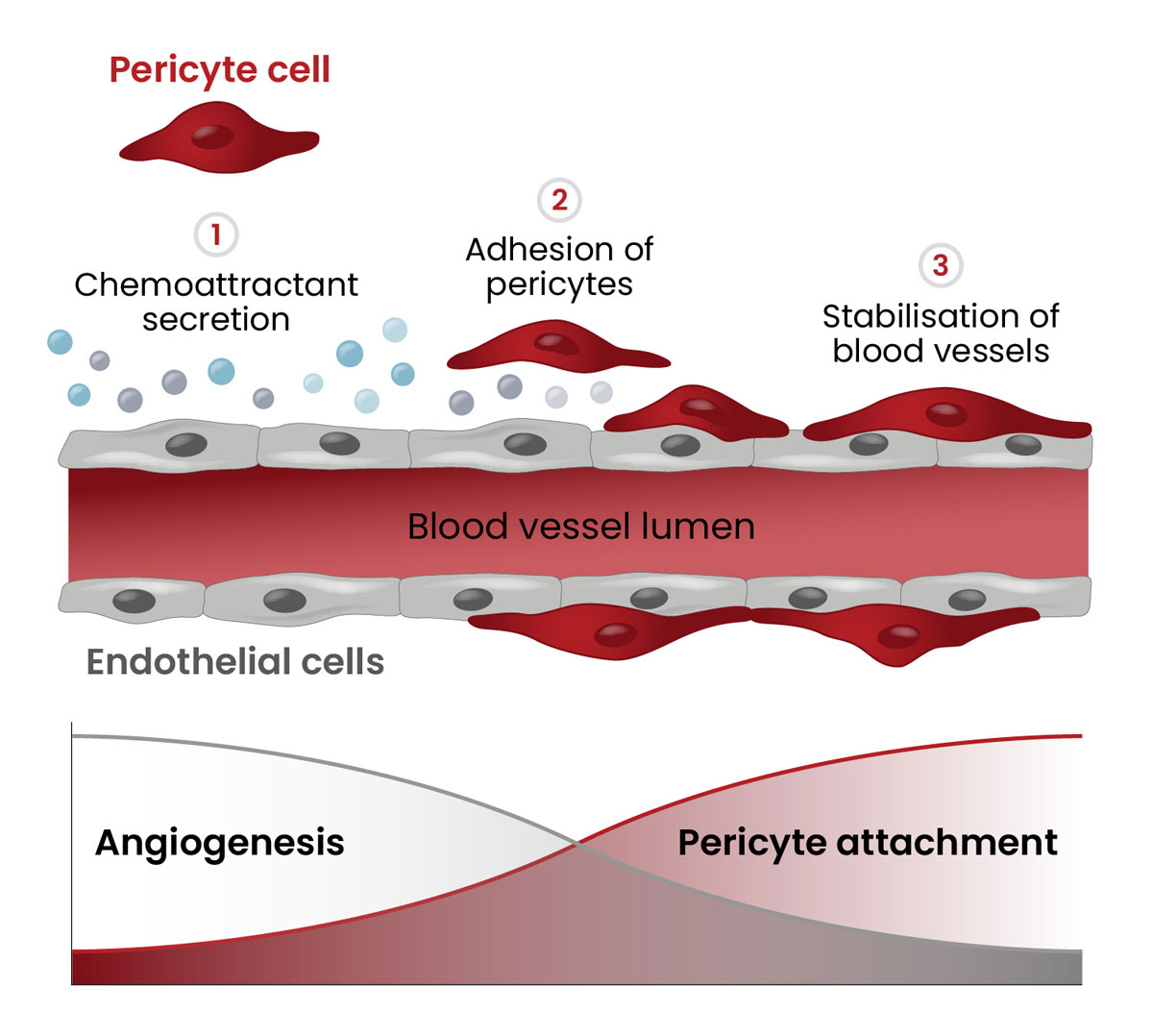
Pericytes (initially known as Rouget cells) play a crucial role in regulating vascular function and stability.

During blood vessel formation (angiogenesis) endothelial cells which line the blood vessel lumen secrete chemoattractants to the local environment attracting pericytes to adhere to the growing vessel walls providing key structural and functional activities.

Pericytes play a key role and are essential regulators of:

  • Blood vessel maturation and stability
  • Endothelial cell function
  • Tissue repair and vascular remodelling.

When pericyte function is disrupted, it leads to:

  • Fragile, leaky vasculature
  • Abnormal vessel formation
  • Chronic disease progression.

We are translating the biology of pericyte dysfunction and its role in vascular function and stability into promising new therapeutics that:

  • Modulate pathways controlling pericyte behaviour
  • Restore vascular integrity
  • Normalise microvascular function.

Our periSCOPE platform

Targeting pericyte dysfunction supports broad therapeutic opportunities

We have created the periSCOPE platform through our integrated relationship with LUMC and other collaborators. The platform supports broad therapeutic opportunities, our initial focus is on Hereditary Haemorrhagic Telangiectasia (HHT), an inherited rare genetic disorder affecting 1.4 million people worldwide.

Addressing the fundamental role that pericytes play in a multitude of diseases.

While our proprietary periSCOPE platform supports broad therapeutic opportunities, our initial focus is on Hereditary Haemorrhagic Telangiectasia (HHT), an inherited rare genetic disorder affecting 1.4 million people worldwide.

We are translating clear links from HHT preclinical models to clinical endpoints and defining patient groups for trials.
Platform advantages

Check Check

Mechanism-first

grounded in disease biology

Check Check

Translational

clear link from preclinical models to clinical endpoints

Check Check

Scalable

applicable across multiple vascular indications